

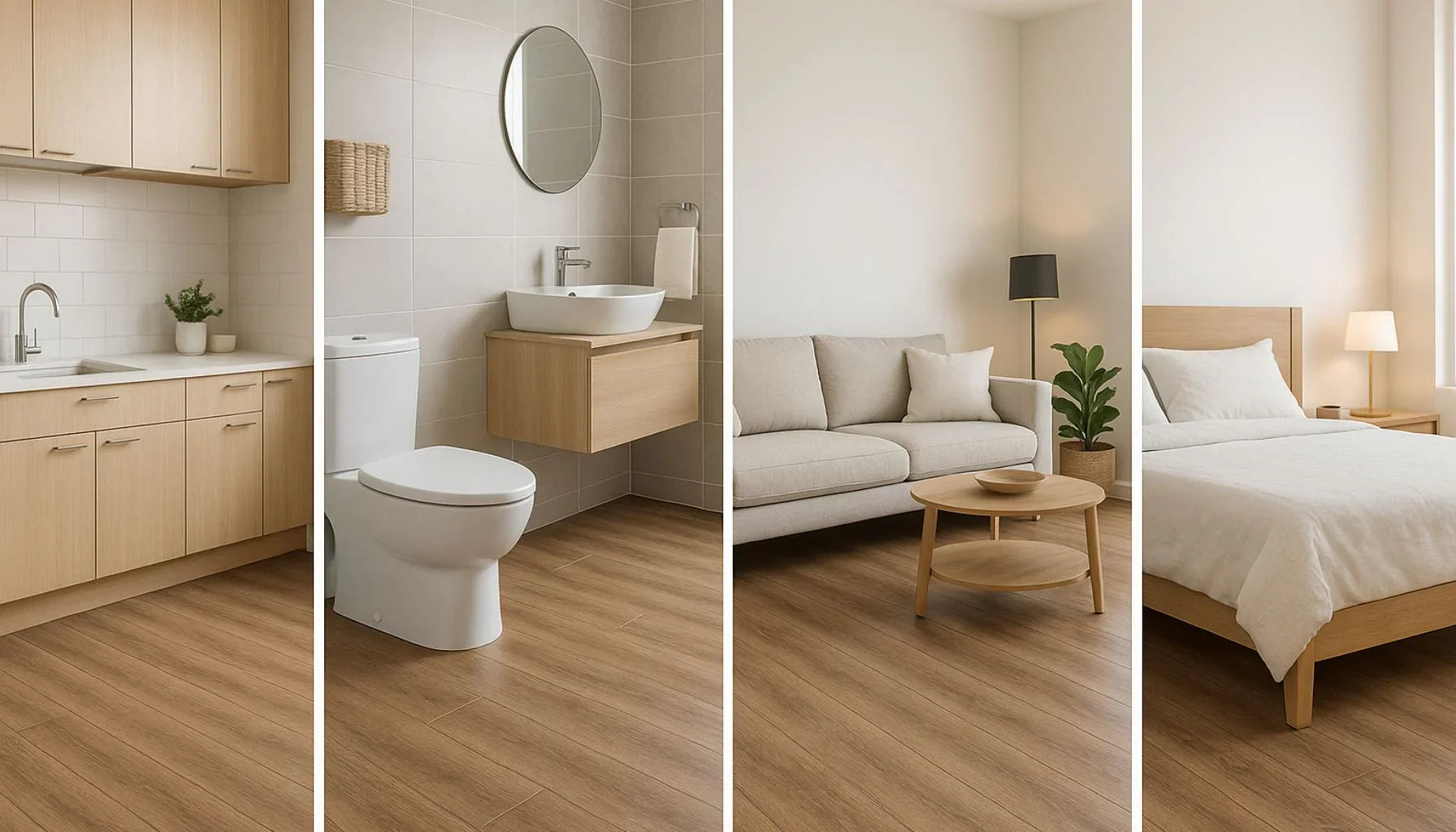
If you're exploring flooring options for your home, you've probably come across SPC flooring. But what exactly is it, and why are so many people talking about it lately?
SPC, or Stone Plastic Composite flooring is a type of rigid-core luxury vinyl flooring that's designed to combine durability, style, and practicality into one easy-to-install package. Made from a blend of natural limestone powder, polyvinyl chloride, and stabilizers, it offers strength and resilience unmatched by traditional vinyl floors.
One reason homeowners and interior designers alike are flocking to SPC flooring is its unbeatable durability and water-resistant properties. Whether you're dealing with spills, pets, or high-traffic areas, SPC can handle just about anything your family throws its way. Plus, it comes in countless styles—from realistic wood-like finishes to sophisticated stone textures—giving you the look you want without compromising functionality.
In this guide, we'll explore exactly where SPC flooring works best, where you might want to reconsider, and how to make sure it's the right fit for your home. Let's dive in!
Kitchens: Is SPC Vinyl a Smart Choice?
When it comes to kitchen flooring, many homeowners traditionally opt for ceramic or porcelain tiles due to their durability and water resistance. However, Stone Plastic Composite (SPC) flooring has emerged as a compelling alternative, offering a blend of practicality and style.
Why It Works:
- Waterproof and Moisture-Resistant: SPC flooring is 100% waterproof, perfect for handling spills, splashes, or leaks common in kitchens.
- Durability: The dense composition of SPC flooring provides excellent resistance to dents, scratches, and stains, which is ideal for high-traffic kitchen areas.
- Ease of Maintenance: Regular sweeping and occasional mopping keep SPC floors looking new, saving you time on daily cleanup.
- Aesthetic Versatility: Available in various designs and textures, SPC flooring can mimic the appearance of natural wood or stone, allowing homeowners to achieve their desired kitchen aesthetic without compromising on functionality.
Considerations Before You Decide:
- Comfort Underfoot: SPC flooring is harder underfoot compared to materials like cork or certain types of vinyl. If you spend extended periods standing in the kitchen, you might consider using area rugs or mats in key areas to enhance comfort.
- Subfloor Preparation: For optimal performance, SPC flooring requires a level subfloor. Uneven surfaces may need to be addressed before installation to prevent issues like clicking or shifting.
SPC Flooring vs. Traditional Tile in Kitchens
While ceramic and porcelain tiles have long been favored for kitchens, SPC flooring offers several advantages:
- Installation: SPC flooring often features a click-lock installation system, which can be quicker and less labor-intensive than the mortar and grout process required for tiles.
- Thermal Comfort: Tiles can feel cold underfoot, especially in cooler climates. SPC flooring tends to maintain a more consistent temperature, contributing to a more comfortable kitchen environment.
- Cost-Effectiveness: Depending on the specific products and installation requirements, SPC flooring can be a more budget-friendly option compared to high-end tiles.
In summary, SPC flooring is a viable and often advantageous choice for kitchen applications, offering durability, water resistance, and aesthetic flexibility. However, it's essential to consider factors like underfoot comfort and subfloor conditions to ensure it meets your specific needs.
Bathrooms: Is SPC Truly Waterproof?
When selecting bathroom flooring, it's essential to choose a material that can withstand moisture, humidity, and daily wear. SPC flooring has gained popularity as a bathroom flooring option due to its durability and water-resistant properties.
Benefits of SPC for Bathrooms:
- Superior Moisture Resistance: SPC flooring is genuinely waterproof, thanks to its rigid core, which includes limestone powder and PVC components. This feature prevents moisture absorption, making SPC floors an ideal solution for wet environments like bathrooms.
- Protection Against Mold and Mildew: Bathrooms often battle mold and mildew due to constant humidity. SPC flooring naturally resists mold growth, protecting your family’s health and ensuring your bathroom stays fresh and clean without constant maintenance.
- Low-Maintenance: Easy cleaning is another major advantage. A quick wipe-down after your shower or bath is usually enough to maintain a spotless bathroom floor, keeping maintenance tasks hassle-free.
When to Think Twice:
- Proper Installation: To maximize water resistance, it's crucial to ensure that SPC flooring is installed correctly, with attention to sealing edges and seams to prevent moisture infiltration.
- Slip Resistance: While many SPC flooring options offer textured surfaces for slip resistance, it's advisable to check the specific product's slip rating to ensure safety in wet conditions.
In summary, SPC flooring can be a suitable choice for bathrooms, offering durability, water resistance, and design flexibility. However, proper installation and consideration of comfort and safety features are essential to ensure optimal performance in a bathroom setting.
Living Areas: Beauty Without the Hassle
Your living room is more than just a place to watch TV—it's where family gathers, friends visit, and memories are made. So naturally, you want flooring that's inviting, attractive, and practical for daily living. SPC flooring delivers on all fronts, offering the style of hardwood or stone without the hassle of constant upkeep.
Key Benefits:
- Stylish Versatility: SPC flooring convincingly replicates the look of natural materials like hardwood, stone, or tile. With a wide range of textures and shades available, you can effortlessly find a design that complements your home's decor.
- Scratch and Dent Resistance: If you've got kids, pets, or frequent guests, SPC flooring stands up to heavy use remarkably well. Its durable surface resists scratches from furniture, pet claws, and dropped items, ensuring your floors look pristine for years.
- Easy to Keep Clean: Forget about specialized cleaning products or complicated maintenance routines. SPC flooring requires minimal care—usually just a quick vacuum or sweep and occasionally mopping with a gentle cleanser.
Potential Drawbacks:
- Comfort and Warmth: SPC flooring, while practical, tends to feel firmer underfoot than carpet or traditional wood. For a cozy vibe, consider adding stylish area rugs or quality underlayment to enhance comfort and warmth.
In short, SPC flooring in your living room offers a worry-free, beautiful flooring solution that balances elegance with real-life functionality.
Bedrooms: Can Vinyl Composite Flooring Feel Cozy?
Your bedroom is your personal sanctuary—a place to unwind, recharge, and start each day fresh. When choosing flooring, comfort, style, and ease of maintenance matter most. Surprisingly, SPC flooring is becoming a favorite for bedrooms, and it's easy to see why.
Why Homeowners Love It:
- Hypoallergenic and Easy to Clean: SPC flooring doesn't trap dust, allergens, or pet hair like carpets often do. This makes it an excellent choice if you or your family members struggle with allergies or asthma.
- Quiet Underfoot: Nobody wants squeaky or noisy flooring disturbing their peaceful bedroom retreat. SPC flooring is quiet, especially when paired with quality underlayment, helping you maintain a calm and relaxing environment.
- Design Flexibility: SPC flooring comes in countless realistic designs—from warm wood tones to modern stone looks—making it easy to match your personal style. You can achieve a luxurious, inviting bedroom aesthetic without breaking the bank.
Possible Challenges:
- Temperature Sensitivity: In colder climates, SPC flooring can feel a bit cool to the touch compared to carpet or hardwood. But this minor issue can be easily solved with area rugs, comfortable slippers, or heated flooring underneath for added warmth and comfort.
Overall, SPC flooring strikes an ideal balance between aesthetics and practicality, transforming your bedroom into a comfortable, stylish haven that’s easy to maintain.
Basement Solutions: Why SPC is a Game-Changer
Choosing the right flooring for your basement isn't always easy. Basements are notorious for moisture issues, temperature swings, and even occasional flooding. While traditional options like carpet, hardwood, or laminate flooring might look good at first glance, they often struggle to hold up in these challenging conditions. Here's why SPC flooring stands out as a superior basement solution compared to other popular flooring types.
Why SPC Flooring Outperforms Other Options:
-
Unmatched Waterproof Protection:
Unlike carpets or hardwood that absorb moisture, SPC flooring is entirely waterproof. Even in situations like flooding or unexpected leaks, SPC won't warp, buckle, or develop mold. This alone makes it a far better choice for basements prone to water issues. -
Stable in Fluctuating Conditions:
Basements naturally experience significant temperature and humidity changes. Laminate flooring often swells or warps under such conditions, and hardwood can crack or cup. SPC flooring remains stable and intact no matter how much your basement environment fluctuates. -
Easy Installation on Concrete:
Compared to tile or carpet—which often require extensive surface preparation and additional moisture barriers—SPC flooring can typically be installed directly onto concrete subfloors. This means fewer headaches, lower installation costs, and quicker project completion.
Special Consideration for Uneven Floors:
- If your basement has significant cracks or uneven surfaces, you’ll need to smooth these out before installing SPC flooring. Addressing these issues upfront ensures long-lasting performance and prevents potential problems down the road.
In short, when comparing SPC flooring to traditional basement flooring options, it's clear why homeowners increasingly choose SPC. Its unbeatable combination of water resistance, stability, and ease of installation makes it the smartest, safest, and most hassle-free choice for basement flooring.
SPC Flooring in Commercial Spaces: Why It’s Ideal for High Traffic Areas
Commercial environments—think offices, retail stores, restaurants, and cafes—require flooring solutions that can handle constant use without losing their appeal. While carpet wears out quickly and hardwood easily scratches or dents, SPC flooring emerges as a superior choice, designed specifically to handle the toughest conditions.
Advantages of SPC in Commercial Settings:
-
Durability That Outlasts Other Flooring Options:
SPC flooring effortlessly stands up to the daily demands of commercial spaces. Unlike hardwood, which scratches easily, or carpet, which shows visible wear patterns, SPC remains intact even after prolonged heavy use, making it ideal for bustling shops, busy offices, and restaurants. -
Low-Cost and Hassle-Free Maintenance:
Keeping commercial floors clean can become expensive and time-consuming, especially with carpet or tile that require regular deep cleaning. SPC flooring simplifies your maintenance routine—regular sweeping and occasional damp mopping are typically all you need, significantly reducing cleaning costs and effort. -
Attractive Professional Appearance:
Businesses need flooring that complements their brand identity without sacrificing practicality. SPC flooring offers realistic textures and designs, from wood-like finishes to elegant stone patterns, giving your commercial space a professional, stylish look without the high maintenance of natural materials.
Important Consideration – Sound Management:
-
Acoustics and Noise Control:
One challenge with SPC flooring in open, expansive areas is its tendency to amplify sound, potentially creating echoes. To manage this, you might need extra soundproofing methods such as adding acoustic underlays, rugs, or other noise-absorbing solutions.
When comparing SPC flooring to alternatives, it's clear why commercial spaces increasingly choose SPC: its unbeatable blend of durability, easy upkeep, and visual appeal makes it the ideal flooring choice for high-traffic environments.
Outdoor and Semi-Outdoor Areas: Can SPC Flooring Hold Up?
When you’re looking for flooring solutions for outdoor or semi-outdoor spaces—like patios, balconies, and sunrooms—the criteria change significantly. Your flooring must withstand varying weather conditions, sunlight exposure, moisture, and temperature shifts. Is SPC flooring up to this task, or should it stay indoors? Let’s take a closer look.
The Harsh Truth About Outdoor Use:
-
Not Suitable for Direct Exposure:
Despite its incredible durability indoors, SPC flooring isn’t designed to endure direct exposure to harsh weather conditions. Prolonged sun exposure can cause SPC to fade or even warp, especially in extreme temperatures. Similarly, constant rainfall or snow will reduce its lifespan significantly. -
Temperature Sensitivity:
SPC flooring can expand or contract with extreme temperature fluctuations, making it risky for fully exposed outdoor areas. For completely uncovered decks, patios, or terraces, alternative materials like composite decking or porcelain tiles might be more reliable.
Ideal for Semi-Outdoor Spaces:
-
Perfect for Covered Areas:
SPC flooring shines best in semi-outdoor spaces—think enclosed porches, screened patios, sunrooms, or covered balconies. These spaces offer protection from direct sunlight and extreme weather, allowing you to enjoy SPC flooring's stylish appeal without worrying about damage. -
Stylish and Practical:
In semi-outdoor environments, SPC flooring offers exceptional value by providing the natural look of wood or stone without the maintenance headaches. It remains waterproof, easy to clean, and resistant to daily wear, making your semi-outdoor spaces inviting and hassle-free.
In short, while SPC flooring isn’t ideal for fully exposed outdoor use, it's an excellent choice for spaces where it's protected from harsh elements, helping you create beautiful, low-maintenance transitional areas.
When Not to Choose SPC Flooring: Recognizing Its Limitations
While SPC flooring has become popular due to its versatility and durability, there are still situations where it might not be your best choice. Understanding these limitations upfront ensures you make an informed flooring decision that suits your space perfectly.
Situations Where SPC Flooring Might Fall Short:
-
Areas Requiring Extra Insulation and Warmth:
If warmth and insulation underfoot are essential—like in cozy bedrooms in colder climates—SPC flooring can sometimes feel cool and less inviting compared to carpet or engineered hardwood. In these cases, opting for softer, insulating flooring options might enhance comfort significantly. -
Fully Outdoor or Exposed Environments:
As mentioned earlier, SPC flooring struggles to withstand direct sunlight, harsh temperatures, or heavy rain and snow exposure. If you're planning flooring for fully outdoor decks, terraces, or uncovered balconies, you're better off considering weatherproof alternatives like composite decking, stone pavers, or porcelain tiles. -
Areas Where Sound Management Is Critical:
SPC flooring, particularly in large spaces, can amplify echoes or noise. If your priority is creating a quiet, acoustically balanced environment—like in certain office areas, libraries, or music rooms—carpet or flooring with specialized acoustic underlay might serve your needs better.
Recommended Alternatives:
-
Engineered Hardwood:
Ideal for spaces where warmth and natural aesthetics are top priorities. -
Porcelain Tile:
Perfect for outdoor areas or high-moisture zones requiring robust weather resistance. -
Luxury Carpet:
Best suited for rooms where insulation, comfort, and sound absorption matter the most.
By recognizing these limitations, you’ll be well-equipped to choose the flooring option that best matches your specific needs and lifestyle, ensuring satisfaction for years to come.
Conclusion: Making the Right Choice for Your Space
Choosing flooring can significantly impact the comfort, style, and value of your home or commercial property. SPC flooring offers remarkable versatility, exceptional durability, and easy maintenance, making it suitable for most rooms and situations—but not all.
To quickly recap, SPC flooring excels in:
- Kitchens and bathrooms, where waterproofing is essential.
- Living rooms and bedrooms, offering beauty with minimal upkeep.
- Basements and commercial spaces, due to its durability and stability in challenging environments.
- Semi-outdoor spaces, where it’s protected from harsh elements.
However, remember its limitations—SPC flooring may not be ideal for spaces needing extensive warmth, sound insulation, or direct outdoor exposure.
The key to choosing the right flooring is aligning your space’s needs with the strengths of SPC flooring. If SPC flooring seems like the perfect fit for your next renovation, the flooring experts at Golden Elite Deco are here to help.
Ready to see what SPC flooring can do for your space? Visit us online or reach out to our flooring specialists today to get started!


