

You've picked the vanity, laid the tile, and chosen the fixtures — but the bathroom mirror is the one detail that can make or break the whole look. Get it right and the room feels polished, spacious, and intentional. Get it wrong and even a $5,000 renovation can feel unfinished. The good news? Choosing the perfect bathroom mirror is a lot simpler than most people think. This guide walks you through every decision, step by step, so you walk away knowing exactly what to buy — and why.
Step 1: Measure Your Vanity Before You Do Anything Else
The single biggest mistake Montreal homeowners make is shopping for a mirror before measuring. The mirror's width should be equal to or slightly narrower than your vanity — typically within 2 to 4 inches on each side. This creates a visually balanced composition that designers call 'anchoring.' A mirror that's too wide looks like it belongs in a gym locker room. One that's too narrow looks like an afterthought.
The Right Sizing Formula
- Measure the full width of your vanity cabinet (not the countertop overhang).
- Subtract 2–4 inches from each side. That's your ideal mirror width range.
- For height, aim for a mirror that starts 5–8 inches above the backsplash or countertop and extends as high as your ceiling height and lighting allow.
- If you have a double vanity (60" or wider), consider two mirrors side by side instead of one large mirror — it looks more intentional and is easier to install.
Pro Tip: For standard 8-foot ceilings, a mirror that's 36–40 inches tall hits the sweet spot between functional and dramatic. Taller mirrors work beautifully in bathrooms with higher ceilings or a single vanity where you want a statement piece.
Step 2: Decide Between a Flat Mirror and a Medicine Cabinet
This is where most people get stuck. A flat mirror is all about the look — it's sleek, minimal, and maximizes the feeling of space. A medicine cabinet gives you that same reflective surface on the front but adds serious hidden storage behind it. For Montreal apartments and condos where every square inch counts, a recessed medicine cabinet can eliminate the need for a separate vanity organizer entirely.
When to Choose a Flat Mirror
- You already have adequate storage in your vanity drawers and under-sink cabinet.
- You want a bold, frameless look or an oversized statement mirror.
- Your bathroom has a modern or minimalist design aesthetic.
- You're working with a wall that has plumbing or electrical behind it that prevents recessing.
When to Choose a Medicine Cabinet
- Your bathroom lacks drawer or cabinet storage — very common in older Montreal homes.
- You want to keep countertops completely clear for a spa-like feel.
- You share the bathroom and need organized, separate storage for two people.
- You're doing a full renovation where adding a recessed niche is easy during the framing stage.
Step 3: Match Your Mirror Style to Your Bathroom Design
The mirror is the face of your bathroom. It reflects (literally) the design language of the entire space. Choosing a mirror that clashes with your vanity or tile is one of the most common renovation regrets we hear from customers. Here's how to match them correctly.
Mirror Styles by Bathroom Aesthetic
- Modern / Contemporary: Frameless mirrors or thin metal frames in brushed nickel or matte black. Clean lines, no ornamentation.
- Traditional / Classic: Framed mirrors in wood or ornate metal. Beveled glass edges add elegance without effort.
- Transitional (the most popular style in Quebec right now): Soft rectangular frames in warm metals like champagne bronze or brushed gold — works with both modern and classic vanities.
- Scandinavian / Nordic: Natural wood frames, simple shapes, warm white or oak finishes.
- Industrial: Black metal frames with exposed hardware. Pairs well with concrete tile and dark grout.
Pro Tip: Always match your mirror frame finish to at least one other metal in the bathroom — faucet, towel bar, or light fixture. Mixing two metals intentionally is fine (it's actually a designer trick), but three or more starts to look accidental.
Step 4: Think About Lighting — Before You Hang Anything
Lighting and mirrors work together as a system. The position of your light source determines what kind of mirror you need — and where it should go. Most bathrooms in older Montreal homes have a single ceiling fixture, which casts shadows on your face when you're standing at the mirror. That's the least flattering and least functional setup possible. If you can, plan your mirror and your lighting at the same time.
Lighting Configurations That Work
- Vanity bar light above the mirror: The most common setup. Works well if the light bar is at least 24 inches wide and centered over the mirror.
- Side sconces flanking the mirror: The gold standard for even, shadow-free light. Position the center of each sconce at eye level — about 60–65 inches from the floor.
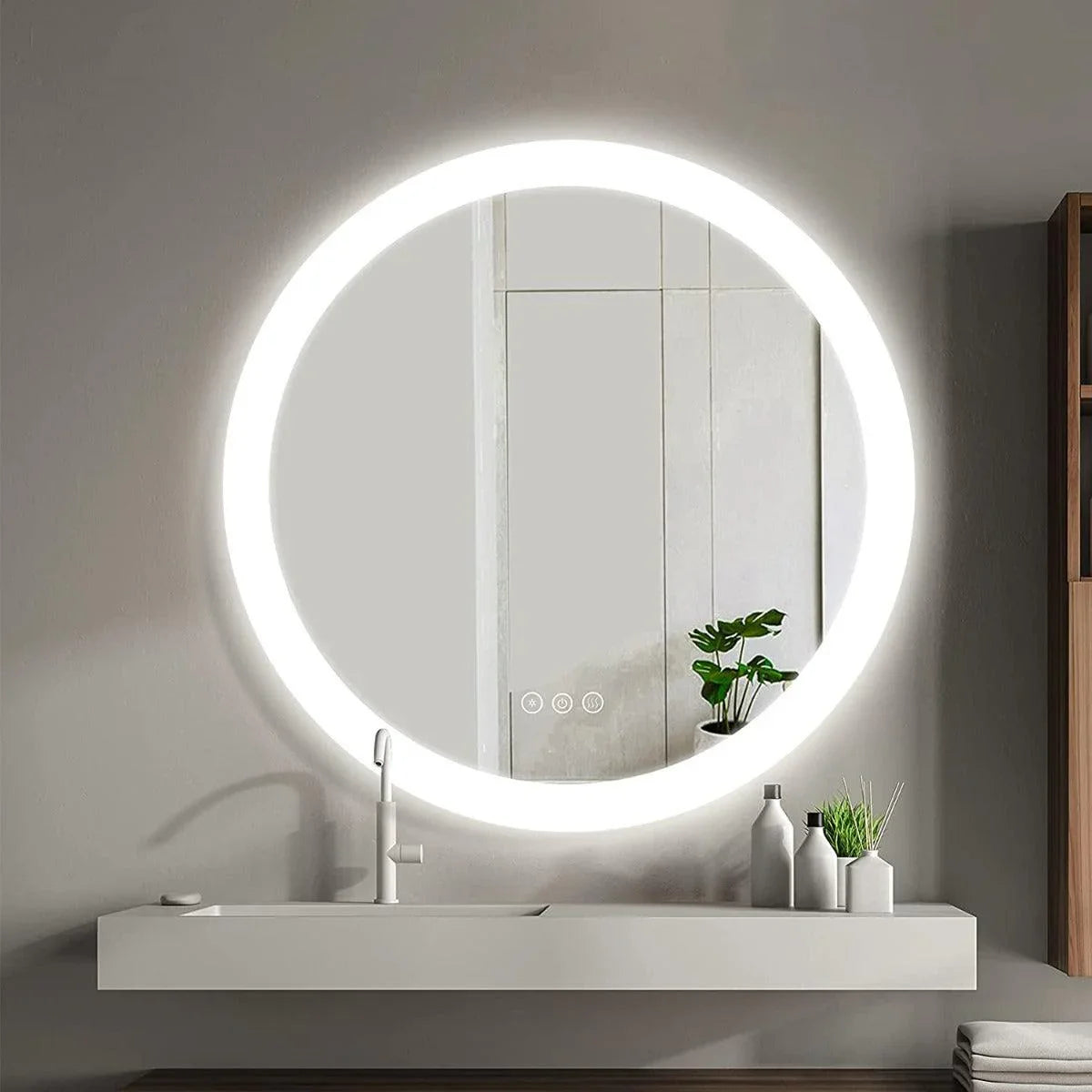
- Backlit LED mirror: A modern all-in-one solution. The mirror itself provides ambient glow and eliminates the need for a separate fixture. Great for contemporary bathrooms.
- Lighted medicine cabinet: Combines storage, mirror, and integrated lighting in one unit. Highly efficient for small bathrooms.
The mirror and the light are a pair — choose them together, not separately. Getting the lighting wrong can make even the most beautiful mirror look flat.
Interior Design principle used by top Montreal bathroom designers
Step 5: Check the Practical Features That Actually Matter
Style gets you excited about a mirror. But these practical features are what make you love it every single morning for the next ten years. Don't overlook them.
Anti-Fog Technology
If you take hot showers — and Montreal winters basically guarantee you will — an anti-fog mirror is a genuine quality-of-life upgrade. Heated mirrors use a thin electrical pad behind the glass to keep the surface clear. Many LED backlit mirrors include this feature built in. It's no longer a luxury add-on; it's quickly becoming the standard expectation in a well-designed bathroom.
Magnification Panels
Many medicine cabinets and some flat mirrors include a built-in magnifying section — usually 5x or 10x — for detail work like applying makeup or grooming. If you currently use a separate countertop magnifying mirror, getting a mirror with this built in frees up valuable counter space.
Adjustable Shelving in Medicine Cabinets
Not all medicine cabinets are created equal. Look for models with fully adjustable shelves so you can accommodate tall bottles, electric toothbrushes, and skincare products of different heights. Fixed shelves sound like a small issue until you're trying to fit a full-size mouthwash bottle and it's an inch too tall.
Step 6: Installation — Surface Mount vs. Recessed
For medicine cabinets specifically, you have two installation paths. Surface-mount cabinets attach directly to the wall and project outward — easier to install, no cutting required, and compatible with any wall type including tile. Recessed cabinets are built into the wall cavity between studs, giving a seamless, built-in look that most homeowners prefer aesthetically. The catch: you need to confirm there's no plumbing or electrical in that wall section, and the standard stud spacing of 14.5 inches needs to match your cabinet width (or you'll need to reframe).
Pro Tip: If you're in the middle of a full bathroom renovation and the walls are already open, always go recessed — it costs almost nothing extra at that stage and looks dramatically better. If you're doing a refresh without opening walls, surface-mount is the smarter, faster choice.
Our Top Picks from Golden Elite Deco
Based on what Montreal homeowners and designers order most frequently from our store, here are three categories that consistently deliver satisfaction across styles and budgets. Every piece in our collection is hand-selected for build quality, finish durability, and design versatility — because we know these mirrors and cabinets go into real homes that need to look great and hold up to daily use for years.
Your Bathroom Mirror Checklist: Quick Reference
- Measure vanity width first. Mirror should be 2–4" narrower on each side.
- Decide: flat mirror for style, medicine cabinet for storage.
- Match frame finish to at least one other metal in the room.
- Plan lighting at the same time as the mirror — they work as a system.
- Check for anti-fog, magnification, and adjustable shelves if those matter to your routine.
- Confirm wall type before ordering a recessed medicine cabinet.
- Order your mirror before you schedule the painter — it needs to be hung before touch-up.
Customers who take 20 minutes to measure and plan their mirror before buying almost never return it. The ones who skip that step? About one in three wish they'd chosen differently.
Golden Elite Deco design consultation team
Choosing a bathroom mirror doesn't have to be overwhelming. Follow the six steps in this guide — measure first, pick your type, match your style, plan your lighting, check the features, and confirm installation requirements — and you'll end up with a mirror that looks like it was custom-designed for the space. Because in a way, it was. Ready to see what's available?


