

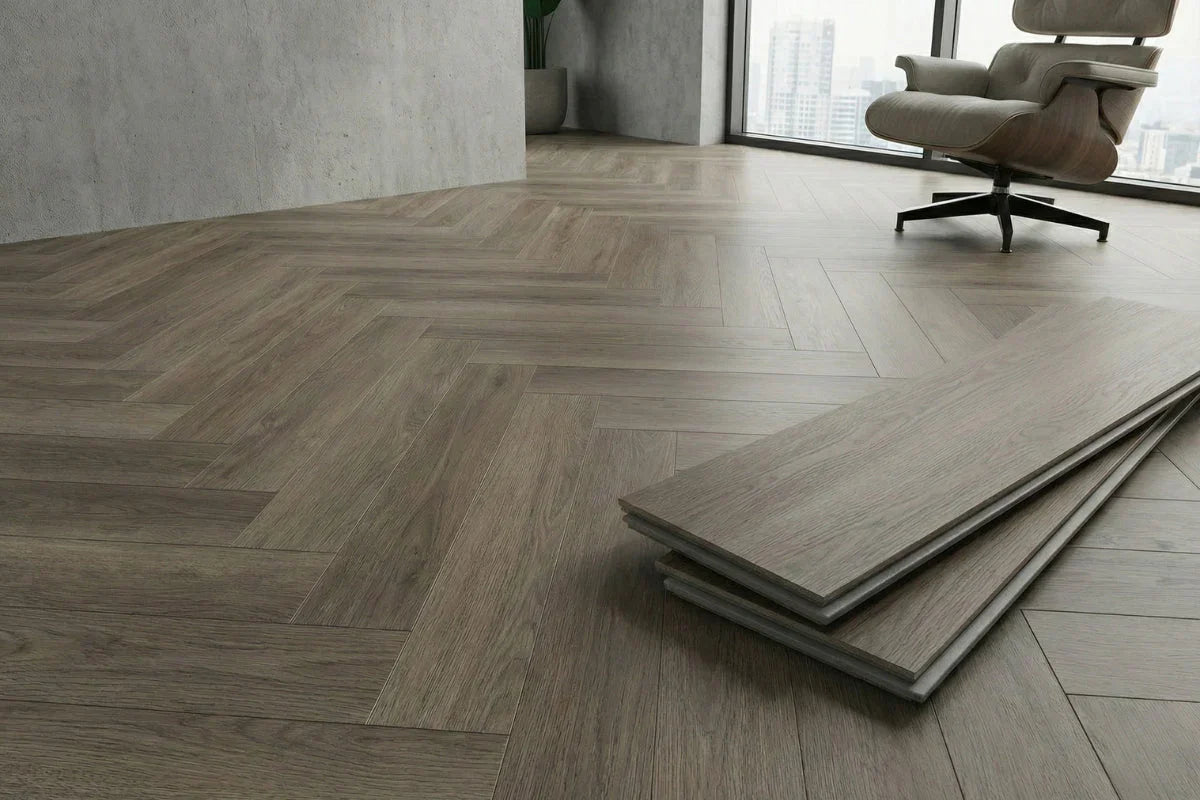
Waterproof Flooring: Protect Your Quebec Home
Because finding water damage at 11 PM on a Sunday night is nobody's idea of fun.
Let me guess: you've dealt with water where it shouldn't be. Maybe spring melt flooded your basement. Or your washing machine decided to leak all over your laundry room floor. Or you walked into your bathroom to find standing water from who-knows-where.
Here's what I learned after my own basement flood three years ago: the flooring you choose either saves you thousands in repairs, or costs you thousands in damage. There's no middle ground when it comes to water.
This guide covers waterproof flooring options that actually work in Quebec's challenging climate—from brutal winters to spring melt to summer humidity. Real solutions, not marketing hype.
Why Quebec Homes Need Waterproof Flooring
Quebec homes face unique moisture challenges that most other places don't deal with.
Our freeze-thaw cycles create foundation cracks. Snow piles against your house all winter, then dumps gallons of water against your foundation when it melts. Summer brings humidity that makes basements sweat. And let's not even talk about what happens when your sump pump fails during a spring rainstorm.
I learned this watching my neighbor's "water-resistant" laminate flooring buckle after one basement leak. $4,000 to replace, plus the cost of fixing the water damage underneath. His contractor told him water-resistant and waterproof are completely different things.
Water-resistant means it can handle spills if you wipe them up quickly. Waterproof means water can sit there for hours or days without causing damage. In Quebec, you need waterproof.
Understanding Your Moisture-Prone Areas
Not every room needs waterproof flooring. But certain areas are ticking time bombs if you install the wrong material.
High-Risk Zones
Basements: Below-grade spaces naturally collect moisture. Foundation seepage, condensation, sump pump failures, washing machine leaks—basements see it all.
Bathrooms: Constant humidity, shower splashes, toilet overflows, sink leaks. Moisture is literally in the air every time someone showers.
Laundry rooms: Washing machines leak. Dryers create condensation. Wet clothes drip. It's not if water hits your floor, it's when.
Kitchens: Dishwasher leaks, refrigerator water lines, sink overflows, spills that don't get wiped immediately. High-traffic plus high-moisture equals trouble.
Entryways and mudrooms: Snow and ice tracked in all winter. Wet boots sitting for hours. Salt residue mixed with moisture. Spring brings mud season.
Medium-Risk Zones
Powder rooms: Less humidity than full bathrooms, but still moisture from sinks and occasional spills.
Hallways near bathrooms: Moisture migrates. Humidity from bathrooms affects adjacent areas.
SPC Flooring: The Indestructible Choice
SPC flooring (stone plastic composite) is what I wish I'd installed before my basement flooded. It's basically indestructible when it comes to water.
What Makes SPC Different
The core is made from limestone and plastic—literally stone-based. Water cannot penetrate it. Not eventually, not over time, not at all. You could leave standing water on SPC for days, and when you mop it up, the floor is fine.
I've seen this tested personally. My friend spilled an entire bucket of mop water in her basement. Didn't notice for six hours. The SPC floor? Completely unaffected. Just mopped it up and moved on.
Where SPC Flooring Excels
Basements: This is SPC's sweet spot. Below-grade moisture, potential flooding, humidity fluctuations—SPC handles all of it without flinching.
Bathrooms: Kids splashing water everywhere, shower steam, the occasional toilet overflow—SPC doesn't care. Wipe it up whenever you get around to it.
Laundry rooms: Washing machine leaks won't destroy your floor. The waterproof core means no warping, no swelling, no buckling.
Kitchens: Dishwasher leaks that you don't discover for days? SPC survives. Refrigerator water line issues? No problem.
SPC Performance Stats
- 100% waterproof core and backing
- Can handle submersion in water
- Won't swell, warp, or buckle from moisture
- Scratch-resistant surface (great for pets)
- Dent-resistant (heavy appliances okay)
- Temperature stable (-20°C to 40°C)
- Commercial-grade wear layer available
SPC Disadvantages
Let's be honest about the downsides.
It's harder underfoot than some options. Not uncomfortable, but you'll notice it's firmer than cushioned vinyl. Some people love this, others prefer softer flooring.
It can feel cold in winter without radiant heat underneath. Not colder than tile, but colder than carpet or luxury vinyl with padding.
Installation requires a very level subfloor. The rigid core doesn't flex to hide imperfections. You might need floor leveling compound first.
SPC Cost Reality
Expect $3-6 per square foot for quality SPC flooring. Installation adds $2-4 per square foot if you hire professionals.
Yes, it costs more than basic laminate. But compared to replacing water-damaged floors plus fixing the subfloor damage? It's cheap insurance.
Browse our SPC flooring options designed for Quebec's tough conditions. We recommend licensed contractors for installation to ensure proper moisture barriers and transitions.
WPC Flooring: Waterproof with Extra Comfort
WPC flooring (wood plastic composite) offers the same waterproof protection as SPC, but with a softer feel underfoot.
What Makes WPC Different
The core still contains plastic and wood fibers, making it completely waterproof. But the formulation creates a slightly softer, warmer feel compared to SPC's rigid stone core.
My sister chose WPC for her bathroom renovation. She loves that it's warm underfoot when she steps out of the shower, even in January.
Where WPC Flooring Works Best
Bathrooms: The softer feel is especially nice in spaces where you're often barefoot. Still 100% waterproof against all that bathroom moisture.
Bedrooms near bathrooms: Not high-risk zones, but the moisture protection provides peace of mind. The comfort factor makes it pleasant for bedroom use.
Living areas prone to spills: Families with young kids or pets appreciate the waterproof protection combined with a more comfortable feel.
WPC Performance Stats
- 100% waterproof core
- Softer, warmer underfoot than SPC
- Built-in cushioning/padding
- Sound-dampening properties
- Temperature stable
- Scratch and dent resistant
WPC Disadvantages
The softer core means it's slightly less dent-resistant than SPC under extremely heavy loads. Fine for refrigerators and washing machines, but commercial equipment might leave impressions.
It's typically more expensive than SPC—usually $4-7 per square foot for quality options.
The extra cushioning means it can feel slightly less stable under rolling chairs or heavy furniture. Not a problem in bathrooms or bedrooms, but worth considering for home offices.
When to Choose WPC Over SPC
Pick WPC if comfort underfoot matters more than maximum durability. It's perfect for bathrooms where you're barefoot daily, bedrooms adjacent to bathrooms, or living spaces where the softer feel is appreciated.
Choose SPC if maximum durability is priority number one—basements, commercial-grade applications, areas with extremely heavy traffic or equipment.
Comparison: SPC vs WPC Flooring
| Feature | SPC Flooring | WPC Flooring |
|---|---|---|
| Waterproof | 100% | 100% |
| Feel Underfoot | Firm, rigid | Softer, cushioned |
| Durability | Maximum | Very high |
| Dent Resistance | Excellent | Very good |
| Warmth | Cool | Warmer |
| Sound Dampening | Good | Better |
| Cost | $3-6/sq ft | $4-7/sq ft |
| Best For | Basements, kitchens, laundry | Bathrooms, bedrooms |
| Commercial Use | Excellent | Good |
Installation Considerations
Both SPC and WPC require proper installation to maximize their waterproof benefits.
Subfloor Preparation
Your subfloor must be clean, dry, and level. "Level" means variations under 3/16 inch over 10 feet. More than that, and you need leveling compound.
Concrete subfloors need moisture testing. Even waterproof flooring benefits from a moisture barrier between concrete and the floor.
Wood subfloors should be structurally sound. Fix any squeaks, replace damaged boards, ensure everything is secure.
Moisture Barriers
Even with waterproof flooring, use appropriate underlayment or moisture barriers. This protects your subfloor from moisture coming up through concrete.
In basements, this is non-negotiable. The waterproof flooring protects from water on top, but moisture still rises from below without proper barriers.
Professional Installation
We don't do installations—licensed contractors handle that properly. Why does this matter?
Improper installation voids warranties. Gaps at walls allow moisture underneath. Wrong transitions create tripping hazards and let water seep through. Skipping moisture barriers defeats half the purpose.
A professional installer costs $2-4 per square foot but ensures your waterproof flooring actually stays waterproof for decades. It's worth every penny.
Room-by-Room Recommendations
Basement Flooring
Best choice: SPC flooring
Why: Basements face the most moisture challenges. Foundation seepage, humidity, potential flooding—you need maximum protection. SPC's rigid core and stone composition handle anything basements throw at it.
Installation tip: Use the thickest wear layer you can afford (20 mil or higher). Basements often become multi-purpose spaces, so extra durability pays off.
Bathroom Flooring
Best choice: WPC flooring for comfort, SPC for maximum durability
Why: Both work perfectly in bathrooms. WPC feels nicer barefoot. SPC handles abuse better in family bathrooms with heavy traffic.
Pair with: A wall-hung vanity maximizes your waterproof floor area and makes cleaning underneath effortless. Or choose a freestanding vanity if you need maximum storage—just ensure proper sealing where it meets the floor.
Kitchen Flooring
Best choice: SPC flooring
Why: Kitchens combine heavy traffic with moisture risks. Dishwasher leaks, refrigerator water lines, sink splashes, dropped ice cubes that melt—SPC handles it all while standing up to dropped pots and pans.
Installation tip: Extend the waterproof flooring into your pantry and adjacent dining area if possible. Water doesn't respect room boundaries.
Laundry Room Flooring
Best choice: SPC flooring
Why: Washing machines eventually leak. Dryers create condensation. Wet clothes drip. You need the toughest waterproof option in here, plus the durability to handle moving appliances around.
Smart move: Run the same flooring into adjacent hallways or mudrooms for visual continuity and extended protection.
Mudroom and Entryway Flooring
Best choice: SPC flooring
Why: Snow, ice, mud, salt, wet boots—entryways see it all. SPC's scratch resistance handles salt and grit, while the waterproof core handles all that melting snow.
Bonus: SPC cleans easily. Just mop up the mess without worrying about moisture damage.
What About Traditional Laminate?
You'll see "water-resistant laminate" marketed everywhere. Here's the truth: it's not the same as waterproof.
Traditional laminate has a wood fiber core. Even "water-resistant" versions will swell and buckle if water sits on them for extended periods. The edges are particularly vulnerable—water seeps in through joints and ruins the floor from the inside.
I watched this happen to my cousin. She installed premium "water-resistant" laminate in her kitchen. Looked beautiful. Then her dishwasher leaked overnight while she was visiting family for the weekend. By the time she got home, the entire floor was buckled. Insurance covered some of it, but she still paid $3,000 out of pocket.
Laminate flooring works great in dry areas—bedrooms, living rooms, dining rooms. It's affordable and looks good. But in moisture-prone areas? It's a disaster waiting to happen.
If you want laminate's look with real waterproof protection, that's exactly what SPC and WPC provide. They look like wood, feel decent underfoot, but won't self-destruct when water appears.
Hardwood Flooring and Moisture
Hardwood flooring is beautiful, classic, and adds real value to homes. But it and moisture are enemies.
Real wood expands when wet, contracts when dry. Quebec's humidity fluctuations—dry winter heat, humid summers, wet spring—cause hardwood to move constantly. In moisture-prone areas, this movement leads to cupping, warping, and gaps.
Use hardwood in living rooms, dining rooms, bedrooms far from bathrooms—spaces where moisture isn't a regular concern. Just keep it away from basements, bathrooms, kitchens, laundry rooms, and entryways.
If you love the hardwood look in these spaces, SPC and WPC come in realistic wood designs that capture the appearance without the moisture vulnerability.
Maintenance and Longevity
One of the best parts about waterproof flooring? It's ridiculously easy to maintain.
Daily Cleaning
Sweep or vacuum regularly to remove dirt and grit. That's it. Unlike hardwood, you don't need special cleaners or treatments.
Spills? Wipe them whenever you notice them. Hours later is fine. Days later is fine. The floor doesn't care.
Deep Cleaning
Damp mop with any pH-neutral cleaner. No special products needed. No waxing, no polishing, no resealing.
For stubborn dirt, use a slightly stronger cleaner. These floors are tough—you won't hurt them with normal household cleaners.
Long-Term Durability
Quality SPC and WPC flooring last 20-25 years in residential settings. Commercial-grade versions last even longer.
The waterproof core doesn't degrade over time like laminate's wood fiber core. The wear layer protects against scratches and stains. There's no refinishing needed like hardwood.
You install it, clean it normally, and it performs flawlessly for decades.
Cost Analysis: Prevention vs Repair
Let's talk real numbers, because waterproof flooring seems expensive until you compare it to water damage repair costs.
Upfront Investment
SPC flooring: $3-6 per square foot (material) WPC flooring: $4-7 per square foot (material) Professional installation: $2-4 per square foot
300 square foot basement: $1,500-3,000 total investment
Water Damage Repair Costs
Replacing water-damaged floors: $2,000-4,000 (materials + labor) Subfloor repair/replacement: $1,500-3,500 Mold remediation: $1,500-4,000 Lost belongings stored on floor: Varies, often thousands
Total typical water damage: $5,000-12,000+
One flood. One leak. One incident erases any savings from choosing cheaper, non-waterproof flooring.
Common Questions
Q: Can I install waterproof flooring over existing floors?
A: Sometimes. SPC and WPC can go over existing vinyl, tile, or concrete if the surface is level and stable. They cannot go over carpet or cushioned vinyl. Consult an installer to evaluate your specific situation—we're happy to recommend experienced professionals.
Q: Does waterproof flooring need underlayment?
A: It depends. Some products have built-in backing. Others require separate underlayment, especially over concrete for moisture protection and sound dampening. Check manufacturer specifications—installation pros know which products need what.
Q: Will waterproof flooring prevent all water damage?
A: It protects your floor and subfloor from damage, but standing water still needs to be addressed. If your basement floods with six inches of water, the floor survives, but you still need to pump out the water and dry everything. The difference is your floor isn't destroyed in the process.
Q: Can I use these floors with radiant heat?
A: Yes! Both SPC and WPC work excellently with radiant floor heating. They conduct heat well and won't warp from temperature changes. Perfect for making cold basement floors comfortable.
Q: What about scratches from pets?
A: SPC and WPC both have excellent scratch resistance. Dog nails won't destroy them like they do laminate or hardwood. Are they completely scratch-proof? Nothing is. But they're as close as you'll get without going to industrial-grade materials.
Q: Do these floors feel fake?
A: Modern SPC and WPC are remarkably realistic. High-definition printing and embossing create wood grain you can see and feel. From normal standing distance, most people can't tell the difference from real wood. Close inspection reveals it's not solid wood, but it's far better than old-style vinyl from the '90s.
Q: How long does installation take?
A: Professional installers typically complete 300-500 square feet per day. A small bathroom might take half a day. A full basement could take 2-3 days. The flooring itself is ready to walk on immediately—no drying or curing time like with tile.
Make the Smart Choice
Water damage isn't a matter of if, it's when. Washing machines leak. Sump pumps fail. Pipes freeze and burst. Toilets overflow. Dishwashers malfunction. Snow melts.
You can either install flooring that survives these inevitable events, or install flooring that turns every water incident into a multi-thousand-dollar disaster.
Ready to protect your home with real waterproof flooring?
Explore our waterproof options: We carry both SPC flooring for maximum durability and WPC flooring for added comfort—both 100% waterproof and perfect for Quebec's challenging climate.
Planning a complete bathroom upgrade? Pair your waterproof flooring with our bathroom vanity collection featuring moisture-resistant designs built for humid environments.
Need installation recommendations? Contact us and we'll connect you with licensed contractors experienced in proper waterproof flooring installation.
Protect your home. Protect your investment. Choose waterproof flooring that actually works.
Quick Decision Guide
Choose SPC Flooring If:
- Installing in basement or below-grade space
- Maximum durability is top priority
- Heavy traffic area or commercial application
- Budget allows $3-6 per square foot
- Want the toughest waterproof option available
Choose WPC Flooring If:
- Installing in bathroom where comfort matters
- Prefer softer, warmer feel underfoot
- Want built-in sound dampening
- Bedroom adjacent to moisture-prone areas
- Budget allows $4-7 per square foot
Installation Checklist
Before installation:
- Test concrete subfloors for moisture
- Level floor to within 3/16 inch over 10 feet
- Remove old flooring completely (if required)
- Repair any subfloor damage
- Schedule professional installer
During installation:
- Use proper moisture barriers over concrete
- Leave expansion gaps at all walls
- Install proper transitions to other flooring
- Follow manufacturer acclimation requirements
After installation:
- Wait 24 hours before moving heavy furniture
- Clean with pH-neutral cleaner
- Use felt pads under furniture legs
- Maintain consistent indoor humidity (30-50%)
Stop worrying about water. Start enjoying floors that actually last.


