

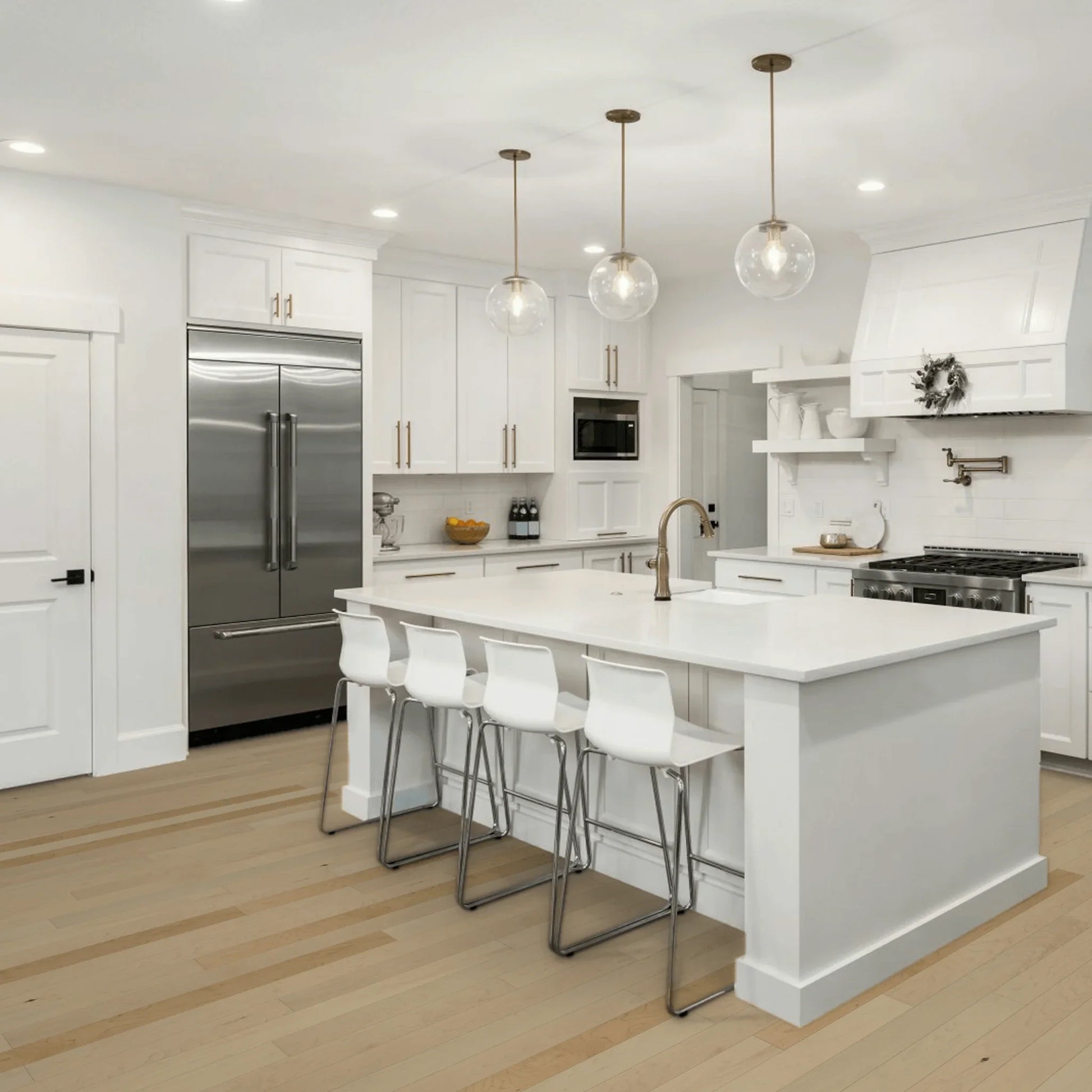
Installing solid hardwood flooring is one of the highest-ROI renovations you can do in a Montreal home. Homeowners who choose hardwood consistently report higher resale value, better indoor air quality, and a sense of warmth that no other material can replicate. But here's the truth most contractors won't tell you: with the right preparation, the right materials, and a clear step-by-step plan, a confident DIYer can absolutely nail this project. This guide breaks it all down — no jargon, no guesswork, just actionable steps.
Hardwood floors added an estimated $8,000 to $10,000 to our resale value. Best renovation decision we ever made.
Marie-Ève T., Laval homeowner
Before You Start: The Preparation Checklist
Most hardwood installation failures happen before a single plank is laid. Skipping the prep phase is the number-one mistake DIYers make. Use this checklist before you order a single box of flooring.
- Measure your room accurately and add 10% for waste and cuts
- Check the subfloor for flatness — it must be within 3/16" over 10 feet
- Ensure the subfloor is dry: moisture levels must be below 12% (use a moisture meter)
- Acclimate your hardwood planks in the room for at least 3–5 days before installation
- Clear the room completely, including baseboards and door casings
- Gather all tools: flooring nailer or stapler, miter saw, tapping block, pull bar, spacers, chalk line
- Review your flooring manufacturer's specific installation guidelines
💡 Pro Tip: Quebec winters are harsh on hardwood. Run your home heating system for at least 5 days before acclimating your planks. Relative humidity in the room should be between 35% and 55% for best results.
Choosing the Right Hardwood: Species, Width, and Finish
Not all hardwood is created equal. The species, plank width, and finish you choose will affect both how the floor looks and how it performs over decades of use. Here's what to consider for each factor.
Species Selection
Oak is the perennial favourite — it's hard, widely available, and takes stain beautifully. Maple offers a cleaner, more contemporary look. Hickory delivers dramatic grain variation that's perfect for rustic or farmhouse aesthetics. If you have pets or kids, prioritize species with a Janka hardness rating above 1,000.
Plank Width
Wider planks (5" and above) are trending right now and make smaller rooms feel larger. Narrower planks (2.25" to 3.25") are more traditional and slightly more stable in humid climates like Montreal's. For most residential projects, 3" to 5" is the sweet spot.
Pre-finished vs. Site-finished
Pre-finished hardwood comes with a factory-applied UV-cured finish — it's harder, more durable, and ready to walk on the same day it's installed. Site-finished floors let you customize the stain color exactly, but require 24–72 hours of dry time per coat. For most homeowners renovating on a schedule, pre-finished is the practical choice.
Step-by-Step Installation Guide
Once your prep work is done and your planks are acclimated, you're ready to install. Follow these steps in order — each one builds on the last, and cutting corners will show for decades.
Step 1: Establish Your Layout Line
Snap a chalk line parallel to the longest, straightest wall in the room. This is your guide line. Most installations run parallel to the longest wall, which creates a more visually spacious effect. Leave a 3/4" expansion gap along all walls to allow the wood to breathe with seasonal humidity changes.
Step 2: Lay the Starter Row
Place your first row of planks along the chalk line, groove side facing the wall. Face-nail the first two rows (because the nailer won't fit close enough to the wall) and countersink the nails. Predrill to avoid splitting. Set the spacers as you go to maintain your expansion gap.
🔧 Pro Tip: Stagger your end joints by at least 6 inches between adjacent rows. Random stagger patterns look the most natural and structurally perform the best. Sort your planks before you start and mix lengths intentionally.
Step 3: Nail or Staple the Field
From row three onward, use a pneumatic flooring nailer or stapler. Position the tool at the tongue of each plank and strike with a rubber mallet. Fasten every 6–8 inches along the length of each board and within 2 inches of each end. Consistent nailing prevents squeaking and cupping over time.
Step 4: Fit Around Obstacles
Door frames, vents, and radiator pipes require precise notch cuts. Use a jigsaw for curves and irregular cuts. For doorways, undercut the door casing so planks slide beneath it — this creates a cleaner, more professional look than coping around the trim.
Step 5: Install the Final Row
Like the first row, the final row usually needs to be ripped to width. Measure carefully — the gap will likely vary slightly from one end to the other if your walls aren't perfectly square. Use a pull bar and a hammer to click the last rows into place, then face-nail and countersink.
Finishing Touches That Make All the Difference
Once the field is down, the details are what separate a DIY job from a professional-looking renovation. Don't rush this phase.
- Install baseboards or quarter-round molding to cover the expansion gap — nail into the wall, not the floor
- Reinstall door casings and undercut door bottoms if needed for clearance
- Install transition strips at doorways, between rooms, or where hardwood meets tile or carpet
- Fill any countersunk nail holes with color-matched wood filler
- Do a final sweep and clean with a hardwood-safe cleaner before furnishing
- Place felt pads under all furniture legs immediately
🚫 Common Mistake: Never use a wet mop or steam cleaner on solid hardwood — not even once. Excess moisture is the enemy of wood floors. Use a slightly damp microfiber mop and a pH-neutral hardwood cleaner only.
Long-Term Care: Protecting Your Investment
Solid hardwood can last 50–100 years with proper care. The key is maintaining consistent indoor humidity (35–55%), protecting from UV fading with window treatments, and refinishing the surface every 10–15 years as needed. Because solid hardwood is thick enough to be sanded and refinished multiple times, it will outlast virtually any other flooring option.
We installed our hardwood 22 years ago and just had it refinished for the first time. It looks brand new. I'll never go back to laminate.
Jean-François B., Brossard homeowner
Ready to Start Your Hardwood Project?
Whether you're a first-time DIYer or a seasoned renovator, Golden Elite Deco has the solid hardwood flooring options to match your vision, your budget, and your timeline. Visit our showroom in Montreal or browse our full collection online. Our team is always available to help you calculate yardage, compare species, and find the perfect match for your home.


