

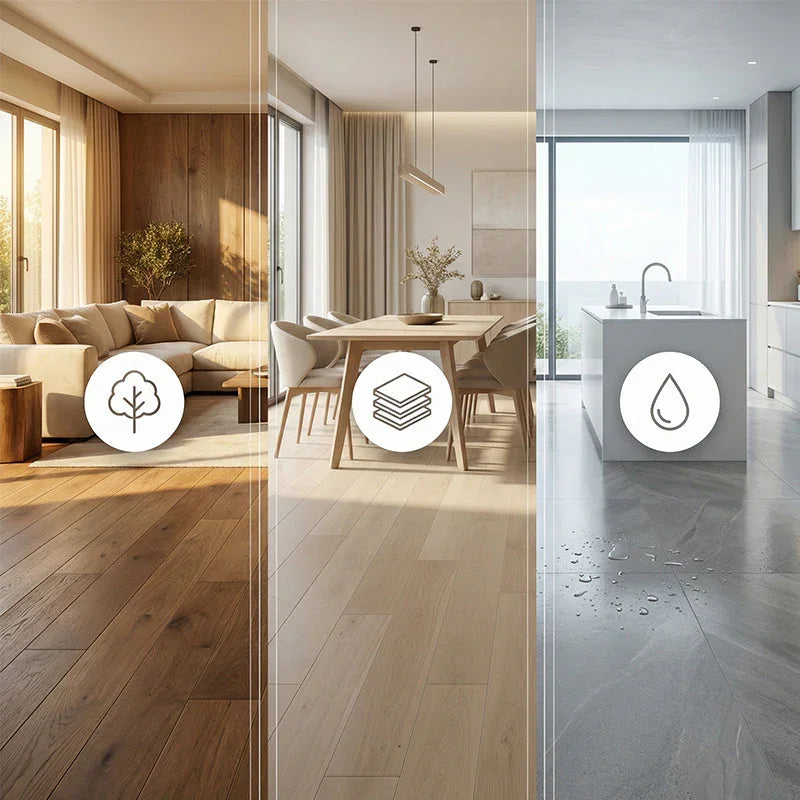
Choosing flooring would be simple if every room in your home had the same needs. But your bathroom faces daily splashes and humidity. Your kitchen handles spills and heavy traffic. Your bedroom prioritizes comfort and warmth. And your basement? It sits on concrete and deals with moisture concerns most other rooms never see.
The key to getting flooring right is matching each room's specific challenges with a flooring type built to handle them. Get it wrong, and you're looking at warped planks, moisture damage, or floors that simply don't hold up to daily life.
This guide breaks down exactly which flooring works best in each room of your home—and why. Whether you're renovating one room or an entire house, you'll know exactly what to look for.
Quick Reference: Best Flooring by Room
Here's a snapshot of our recommendations. We'll explain the reasoning for each below.
|
Room |
Best Choice |
Also Works |
Avoid |
|
Living Room |
Solid or Engineered Hardwood |
SPC |
— |
|
Bedroom |
Hardwood (any) |
SPC |
— |
|
Kitchen |
SPC |
Engineered Hardwood |
Solid Hardwood |
|
Bathroom |
SPC |
— |
All Hardwood |
|
Basement |
SPC |
Engineered Hardwood |
Solid Hardwood |
|
Dining Room |
Hardwood (any) |
SPC |
— |
|
Entryway |
SPC |
Engineered Hardwood |
— |
|
Home Office |
Any |
Any |
— |
Understanding Your Options
Before we go room by room, let's quickly cover the three main flooring types we'll be discussing:
SPC Flooring (Stone Plastic Composite)
SPC flooring has a rigid core made of limestone and PVC, topped with a realistic wood or stone image and a protective wear layer. The result is flooring that's 100% waterproof, extremely durable, and looks remarkably like real wood or stone. It's perfect for moisture-prone areas where traditional wood can't go.
Engineered Hardwood
Engineered hardwood features a real wood veneer on top of a plywood or HDF core. The cross-grain construction makes it more stable than solid wood—it resists expansion and contraction from humidity changes. It's a great middle ground: real wood beauty with better moisture tolerance.
Solid Hardwood
Solid hardwood is exactly what it sounds like—planks of real wood from top to bottom. It offers unmatched beauty, can be refinished many times over its lifespan, and adds significant value to your home. However, it's sensitive to moisture and humidity, which limits where it can be installed.
Living Room: The Heart of Your Home
Best choices: Solid Hardwood or Engineered Hardwood
Your living room is where you entertain guests, spend family time, and make first impressions. This is where real hardwood truly shines. The warmth, character, and timeless elegance of wood flooring elevates the entire space.
Why hardwood works here: Living rooms are typically dry, above-grade spaces with moderate traffic—ideal conditions for wood. The natural warmth of hardwood creates an inviting atmosphere, and the ability to refinish means your floors can look new again decades from now.
Solid vs. engineered: Either works beautifully in living rooms. If your home has radiant heating or you experience significant humidity swings, engineered hardwood offers better dimensional stability. For maximum refinishing potential and a completely solid feel, choose solid hardwood.
Pro tip: White oak in matte finishes is a 2025 favorite—it's durable, hides scratches well, and works with virtually any décor style from modern to traditional.
Bedroom: Comfort and Warmth
Best choices: Hardwood (Solid or Engineered) or SPC
Bedrooms are low-traffic, private spaces where comfort and aesthetics take priority. This gives you the most flexibility in your flooring choice.
Why hardwood is the classic choice: There's something special about stepping onto warm hardwood floors on a cold morning. Hardwood brings natural beauty to your bedroom and can easily be softened with area rugs for added comfort.
When to consider SPC: If you have pets that occasionally have accidents, kids who bring drinks to their room, or you simply want a budget-friendly option that still looks great, SPC flooring is a practical alternative. Today's SPC offers remarkably realistic wood visuals.
Pro tip: Bedrooms on upper floors benefit from SPC's sound-dampening properties—it's quieter underfoot and reduces noise transfer to rooms below.
Kitchen: Where Durability Meets Design
Best choices: SPC Flooring or Engineered Hardwood
Kitchens are high-traffic zones with inevitable spills, splashes, and dropped items. Your flooring needs to handle moisture near sinks and appliances while still looking beautiful.
Why SPC is the top choice: SPC flooring is 100% waterproof—not just water-resistant. If a pipe leaks under your sink or a pot of water boils over, SPC won't warp, swell, or sustain damage. It's also incredibly scratch-resistant, standing up to heavy foot traffic and chair movement.
When engineered hardwood works: If you love the warmth of real wood and are diligent about wiping up spills quickly, engineered hardwood can work in kitchens. Its layered construction handles humidity better than solid wood. However, it's still not fully waterproof—standing water is the enemy.
Avoid in kitchens: Solid hardwood. Even with modern finishes, solid wood remains too vulnerable to moisture damage in this high-risk environment.
Bathroom: Moisture Is the Enemy
Best choice: SPC Flooring
Bathrooms are the most moisture-intensive rooms in your home. Between showers, baths, sink splashes, and high humidity, flooring here faces daily water exposure.
Why SPC dominates here: SPC flooring is completely waterproof—it can literally be submerged without damage. The rigid core won't swell, warp, or grow mold even with constant moisture exposure. Plus, modern SPC comes in stunning wood and stone looks that elevate your bathroom design.
What to avoid: Both solid and engineered hardwood should stay out of full bathrooms. Even though engineered is more moisture-resistant, it's not waterproof—over time, bathroom humidity will damage it.
Pro tip: Pair your new bathroom floor with other upgrades like a modern bathroom vanity or LED mirror for a complete refresh.
Basement: Below-Grade Challenges
Best choices: SPC Flooring or Engineered Hardwood
Basements present unique challenges: they sit below grade, often directly on concrete, with potential moisture concerns from the ground and walls. Solid hardwood is simply not an option here.
Why SPC is ideal: SPC flooring can be installed directly over concrete without a wooden subfloor. Its waterproof construction handles basement moisture concerns, and the floating installation allows the floor to move with minor concrete shifts.
When to choose engineered: If you want real wood beauty in your finished basement, engineered hardwood can work with proper moisture barriers and humidity control. It handles below-grade installation far better than solid wood.
Critical note: Before installing any flooring in a basement, address any moisture issues. Test for moisture in the concrete and ensure proper drainage and waterproofing.
Dining Room: Elegance That Handles Life
Best choices: Hardwood (Solid or Engineered) or SPC
Dining rooms need flooring that looks elegant enough for dinner parties but can handle chair movement, dropped food, and occasional wine spills.
Why hardwood excels: Nothing matches the sophistication of real wood in a dining room. The warm tones create an inviting atmosphere for meals and gatherings. Choose a harder species like oak or hickory for better scratch resistance.
Protect your investment: Use felt pads under chair and table legs, and consider an area rug under the dining table to prevent scratches from chair movement.
Hallways and Entryways: High-Traffic Zones
Best choices: SPC Flooring or Engineered Hardwood
Entryways and hallways see the most foot traffic in your home. Dirt, grit, water from shoes, and constant use demand exceptionally durable flooring.
Why SPC shines: SPC's thick wear layer resists scratches from dirt and grit better than most materials. Its waterproof nature handles wet shoes and umbrellas without concern. And it cleans up easily.
When hardwood works: Engineered hardwood can handle entryways if you choose a harder species and commit to regular maintenance. Place mats at entrances to trap dirt and moisture before they reach your floors.
Home Office: Comfort for Long Days
Best choices: Any (Hardwood or SPC)
Home offices are low-moisture environments with moderate traffic—virtually any flooring works here. Your choice comes down to aesthetics, comfort, and budget.
Why hardwood adds professionalism: If your home office doubles as a space for video calls or client meetings, hardwood flooring creates a polished, professional backdrop.
Chair considerations: If you use an office chair with wheels, consider a chair mat to prevent wear, or choose SPC for its superior scratch resistance.
Making the Final Decision
When choosing flooring for your home, consider these factors:
• Moisture exposure: High moisture = SPC. Moderate = Engineered. Low = Any option works.
• Traffic level: High traffic areas benefit from SPC's durability or harder wood species.
• Subfloor type: Concrete subfloors require SPC or engineered—never solid hardwood.
• Longevity goals: Want floors that last 100 years with refinishing? Solid hardwood. Want worry-free durability? SPC.
• Budget: SPC typically offers the best value. Engineered hardwood is mid-range. Solid hardwood is a premium investment.
Ready to Choose Your Floors?
The right flooring makes daily life easier and adds lasting value to your home. Now that you know what works best in each room, you can shop with confidence.
Browse our collections of SPC flooring, engineered hardwood, and solid hardwood to find the perfect match for your project.
Need help deciding? Contact our team—we're happy to help you choose the right flooring for every room in your home.


