

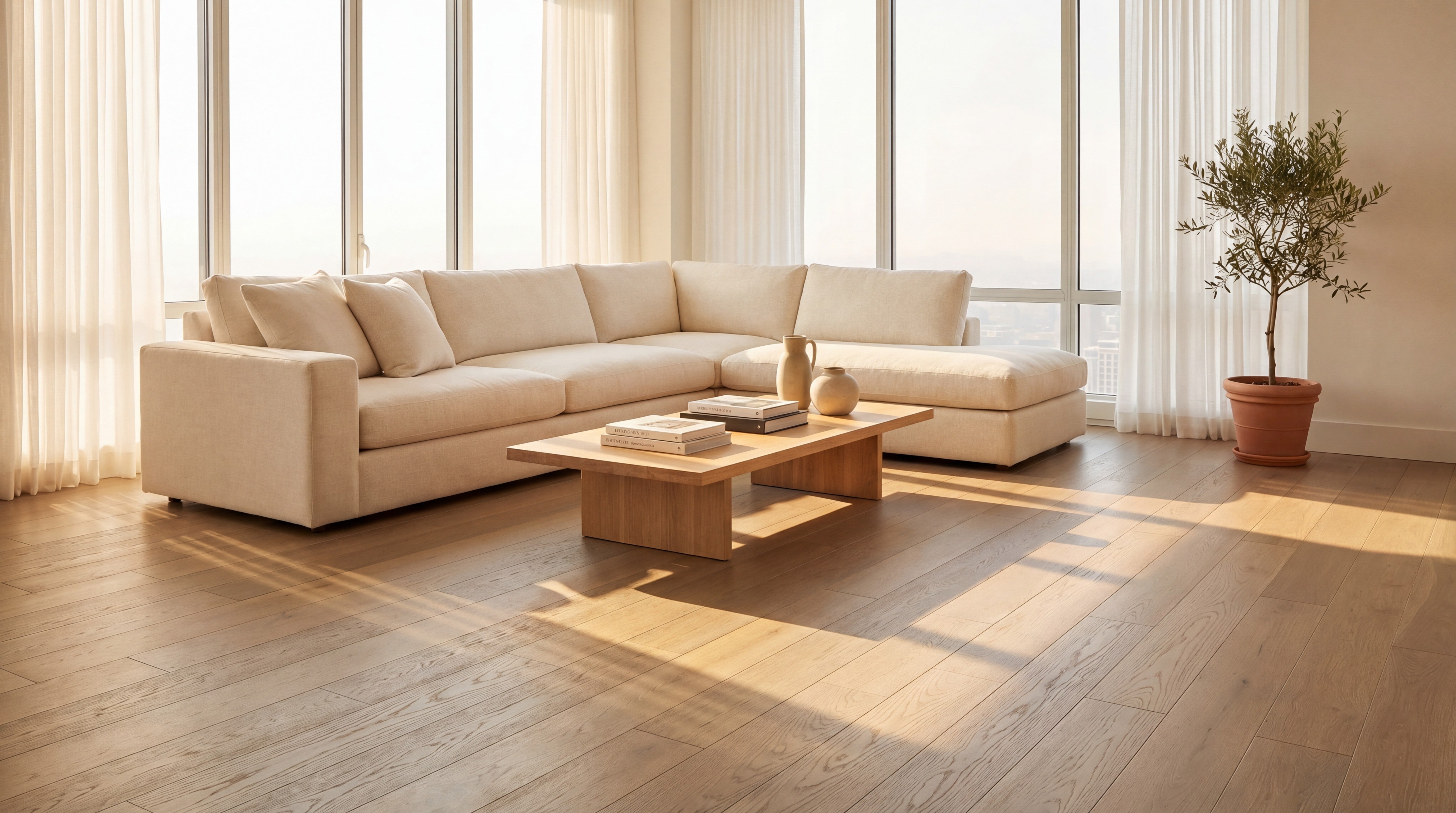
Walk into any luxury condo in Griffintown or heritage home in Outremont right now, and you'll notice something. The floors look impossibly rich—like century-old hardwood that somehow survived Montreal's brutal freeze-thaw cycles without a scratch. But here's what most homeowners don't realize: many of these stunning floors aren't solid hardwood at all.
Something fascinating is happening in Montreal's design scene. While homeowners used to debate between solid hardwood and laminate, a third option has quietly taken over—and it's changing how we think about flooring entirely. The numbers tell the story: engineered hardwood installations in Quebec have jumped 47% in the past 18 months alone, according to the Canadian Wood Council's 2024 report.
Why Montreal's Top Designers Are Switching to Engineered Hardwood
Marie-Claude Bergeron, a designer with over 15 years transforming Montreal homes, puts it bluntly: "I haven't specified solid hardwood for a client in two years. Not because it's not beautiful—it is. But engineered hardwood gives us everything clients want without the compromises."
The shift isn't about cutting corners. It's about engineering that actually works with Montreal's climate. Our winters test every building material to its limits. Solid hardwood expands and contracts with humidity changes, creating gaps in winter and cupping in summer. Engineered hardwood's cross-layered construction stays dimensionally stable through temperature swings that would make traditional flooring buckle.
Pro Insight: Engineered hardwood can handle humidity fluctuations of 35-65% without warping—perfect for Montreal's 40°C temperature swings between July and January.
The Three Looks Dominating Montreal Homes Right Now
1. Wide-Plank European Oak with Wire-Brushed Texture
Picture planks so wide they make a room feel expansive, with a texture you can actually feel underfoot. We're talking 7 to 9-inch widths in warm, natural tones—honey, caramel, and toasted almond shades that glow in Quebec's bright winter light. The wire-brushing technique removes soft grain, leaving behind tactile ridges that catch shadows and add depth. This isn't the glossy gym-floor look of the 2000s. It's matte, organic, and incredibly sophisticated.
Interior designer Sophie Thibault recently completed a Plateau renovation featuring 8-inch European oak planks throughout. "The client wanted warmth without orange tones," she explains. "These wide planks in a natural oil finish give us that Scandinavian-meets-Montreal vibe—cozy but not rustic."
2. Smoky Gray Tones with Subtle Color Variation
Gray flooring had its moment five years ago, but it looked cold—almost sterile. The 2026 version is completely different. Think smoke and fog rather than concrete. These engineered planks feature organic color variation within each board: pewter fading to driftwood, charcoal bleeding into taupe. The effect is moody and layered, like looking at clouds through a window.
This trend pairs perfectly with Montreal's industrial loft conversions. The gray tones complement exposed brick and concrete while adding warmth that pure gray never could. Plus, the color variation means every scratch or scuff becomes part of the floor's character rather than a flaw to hide.
3. High-Contrast Graining with Natural Knots
For years, flooring manufacturers tried to eliminate knots and mineral streaks. Now they're features, not flaws. The most sought-after engineered hardwood planks showcase dramatic grain patterns and natural character marks that tell a story. We're seeing espresso-stained oak with grain so pronounced it creates a three-dimensional effect, and walnut with sapwood streaks that add unexpected contrast.
This trend connects to something deeper: authenticity. After years of trying to make wood look perfect and uniform, homeowners want floors that look and feel real. Knots, mineral streaks, and color variation aren't imperfections—they're proof you're living with actual wood, not a photograph of wood.
The Technical Advantages No One Tells You About
Beyond aesthetics, engineered hardwood solves practical problems that solid wood can't. The construction method—real hardwood veneer over cross-layered plywood or HDF core—creates a floor that's actually more stable than solid planks. Here's what that means for Montreal homeowners:
- Installation over concrete slabs: Perfect for condos and basements where solid hardwood isn't possible
- Radiant floor heating compatibility: The thin profile and stable construction work beautifully with in-floor heating systems
- Faster installation: Click-lock systems mean your floor is ready to walk on immediately, no nails or glue dry time
- More wood from fewer trees: The veneer construction uses precious hardwood species more efficiently
I've installed both solid and engineered hardwood for 20 years. With today's quality engineered products, I honestly can't tell the difference once they're down—but I can tell the difference in how they perform five years later.
Jean-François Morin, Certified Flooring Installer, Montreal
What This Means for Your Renovation Budget
Here's the part that surprises most homeowners: premium engineered hardwood often costs the same or less than mid-range solid hardwood, but it installs faster (saving labor costs) and requires less maintenance long-term. You're getting luxury flooring performance without the luxury price tag anxiety.
The investment makes even more sense when you consider Montreal's real estate market. Buyers recognize quality flooring immediately, and engineered hardwood's durability means it still looks showroom-fresh when you're ready to sell. Design consultant Marc Leblanc notes, "Homes with quality engineered hardwood are spending 18-22 fewer days on the market in 2024 compared to similar properties with older flooring."
Budget Tip: Installing engineered hardwood yourself with click-lock systems can save $3-5 per square foot in labor costs while achieving professional-looking results.
Making the Trend Work in Your Space
The beauty of this flooring trend is its versatility. Whether you're renovating a 1920s duplex in NDG or a new-construction condo in the Quartier des Spectacles, engineered hardwood adapts to your vision. The key is matching the plank style, width, and finish to your home's architecture and light levels.
North-facing rooms benefit from warmer honey and caramel tones that compensate for cooler natural light. South-facing spaces can handle smokier grays without feeling cold. Open-concept layouts shine with wide planks that create visual flow, while smaller rooms feel larger with medium-width boards that don't overwhelm the space.
The Bottom Line
Montreal's design community isn't following a trend—they're responding to a genuine improvement in how flooring performs in our climate. Engineered hardwood delivers the warmth, beauty, and authenticity of solid wood with the stability and versatility that modern homes demand. As renovation budgets get smarter and homeowners expect more from their materials, this shift makes perfect sense.
Whether you're planning a full renovation or just tired of looking at outdated floors, now's the time to explore what modern engineered hardwood can do for your space. The technology has caught up with the aesthetics, and the results speak for themselves—in homes across Montreal that look better and perform better than ever before.


