

Because nobody should learn about frozen pipes at 3 AM in -30°C weather.
Let me guess: you've lived through at least one Quebec winter where something went terribly wrong. Maybe a $400 Hydro bill. Or a flooded basement. Or trying to find a contractor in January who wasn't booked until March.
Here's what I've learned after 15 winters in Montreal: the homeowners who sleep soundly through blizzards spent a few October weekends preparing. This guide covers what actually matters—no fluff, just practical advice that works in Quebec.
Why November is Your Last Chance
Quebec winters don't ease in gradually. One day you're raking leaves, the next it's -15°C and contractors are fully booked.
I learned this the hard way my first winter. I kept thinking "I'll get to it next weekend" about weatherstripping. Then November hit with a cold snap, and I watched my heating bill climb while feeling drafts under my door. The weatherstripping I could have installed in 20 minutes? Had to wait until spring.
Bottom line: Every dollar spent in fall saves three to five dollars in winter costs. More importantly, it prevents that 3 AM panic when something breaks.
Energy Efficiency: Stop Heating the Outdoors
My neighbor Claude was spending $250-300 monthly on heating his '70s home. "That's just how it is," he'd shrug. Then he got a free energy audit through Hydro-Québec.
Two hours later, they found air leaking everywhere—basement rim joists, settled attic insulation, leaky windows. This past winter? His bills dropped to $150-180. Same house, same thermostat. He just stopped heating the neighborhood.
Quick Wins Under $100
Weatherstripping: Replace that compressed old foam with new compression seals. $50 for your whole house, one hour of work. I did this for my aunt—she called a month later confused why her bill was so low.
Window film: That plastic shrink film looks silly but works. Creates an insulating air pocket. My son's freezing bedroom became comfortable for $15.
Outlet gaskets: Foam gaskets behind outlet covers on exterior walls. Two minutes per outlet, massive heat loss stopped.
Door sweeps: Stop cold air rushing under doors. $10 each, instant results.
The Big Impact: Attic Insulation
Your attic is probably your biggest problem. I found 6 inches of old insulation in mine. Quebec code wants 16 inches (R-50). I was basically heating my roof.
Professional blown insulation cost me $1,800. My heating bill dropped $60 monthly. Paid for itself in two and a half winters. Upstairs bedrooms aren't freezing anymore either.
Key point: Seal air leaks BEFORE adding insulation. Otherwise you're just insulating leaks.
Finding Hidden Leaks
Grab a $30 infrared thermometer from Canadian Tire. On a cold day, point it at walls, outlets, baseboards. Different temperature = air leak.
I spent one Sunday with $20 of caulking. Found leaks behind kitchen cabinets, around the bathroom fan, where my deck attached. Sealed everything. That winter I actually turned my thermostat DOWN.
Free help: Hydro-Québec sends someone to find leaks with fancy equipment for free. They tell you which rebates you qualify for. Use it.
Heated Floors: Worth It?
I thought heated floors were pure luxury until I stayed at my cousin's place. Getting out of the shower onto warm tiles instead of shocking cold? Changed my January mornings completely.
Here's the surprising part: heated floors use LESS energy than cranking your whole house heat. Warmth rises naturally from where you need it—your feet.
Where It Makes Sense
Bathrooms: Nobody enjoys freezing tiles at 6 AM. This is the obvious choice.
Kitchens: Standing there making coffee, cooking dinner—warm floors make a difference.
Entryways: Dries snowy boots and stops cold air from seeping in.
Two System Types
Electric mats ($10-15/sq ft installed): Perfect for single bathrooms. Goes under SPC flooring, WPC flooring, or laminate flooring. Your electrician can handle it.
Hydronic systems ($15-25/sq ft): Water tubes under the floor. More efficient for multiple rooms. Needs a specialized installer.
My advice: Electric for one bathroom. Hydronic if you're doing multiple rooms. Either way, hire certified professionals—this isn't DIY territory.
Best Flooring for Radiant Heat
SPC flooring (stone plastic composite): 100% waterproof, indestructible, perfect with radiant heat. This is what I'd use.
WPC flooring (wood plastic composite): Just as waterproof, bit more cushion. Great for bathrooms.
Laminate flooring: Works if it's rated for radiant heat. Check before buying.
Hardwood flooring: Only specific engineered types work. Ask your supplier which ones.
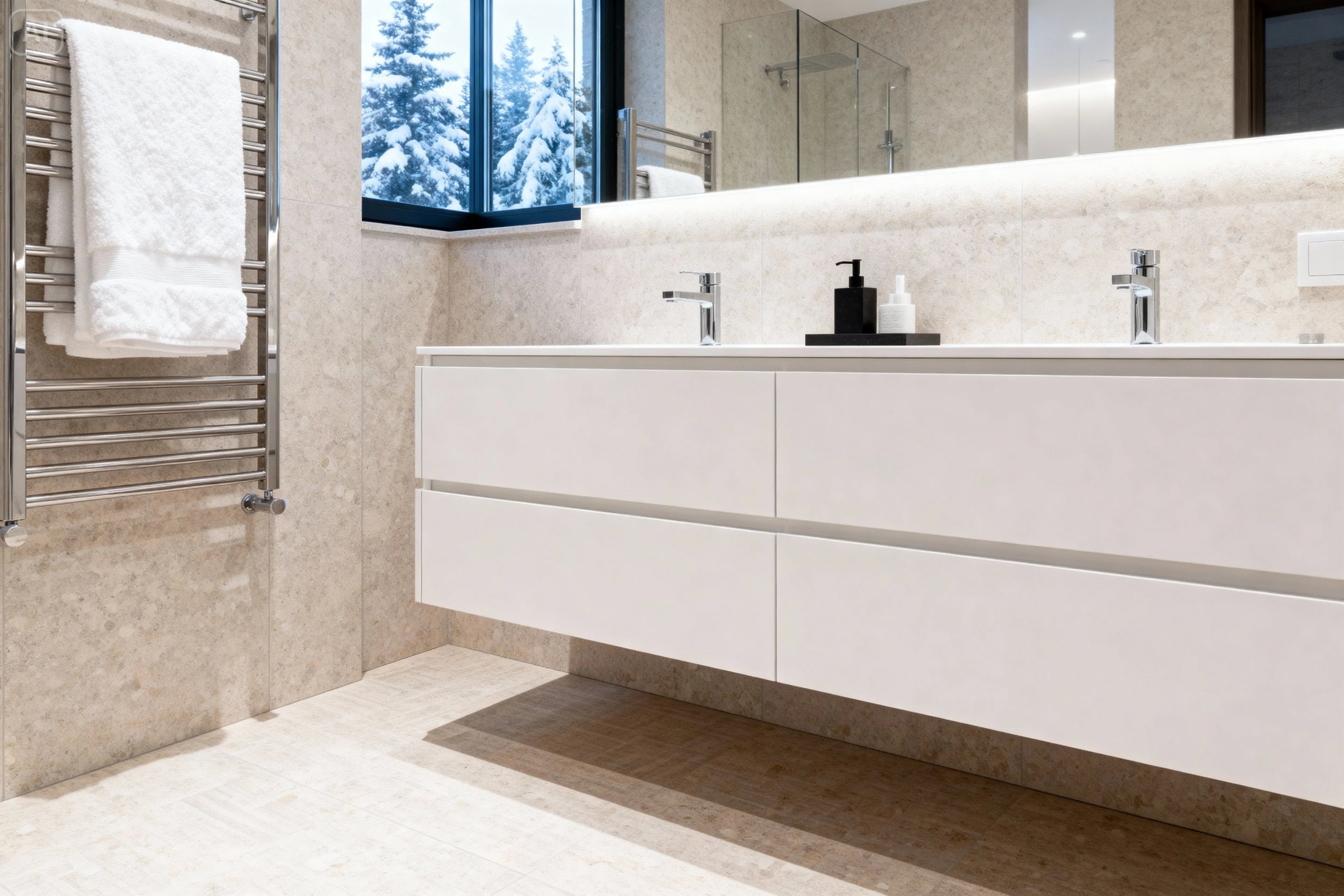
Planning a renovation? Choose a freestanding vanity for storage or a wall-hung vanity to maximize warm floor space. We recommend contractors who install these systems properly—too important to mess up.
Waterproofing: The Non-Negotiable
Quebec's freeze-thaw cycles are brutal. Water gets in tiny cracks, freezes, expands, creates bigger cracks. One winter turns minor issues into $20,000 problems.
Spring melt is worse. Huge water volumes dump against your foundation in weeks. Poor waterproofing = flooded basement, mold, foundation damage.
Prevention is cheap. Repairs are catastrophic.
Exterior Must-Dos
Foundation cracks: Anything bigger than 1/8 inch needs professional repair before winter. Don't wait.
Grading: Ground should slope away 6 inches over 10 feet. Water pooling near your foundation will find a way in.
Gutters and downspouts: Clean completely. Extend downspouts 6 feet from foundation. Clogged gutters dump water right where you don't want it.
Window wells: Cover them. Prevents snow accumulation and keeps water out of basements.
Inside Your Home
Sump pump test: Pour water in the pit. Does it activate and pump out? If not, fix it NOW. Get a battery backup ($300-600) for power outages.
Basement sealing: Hydraulic cement for cracks. Waterproof paint on walls. Dehumidifier to control moisture.
Bathroom Waterproofing
Bathrooms are humidity factories. Hot shower + cold house = condensation everywhere.
What matters:
Vapor barriers behind showers and tubs. Stops moisture reaching walls where it causes mold.
Waterproof membranes (Schluter, RedGard) under your flooring. Goes beneath SPC, WPC, or whatever you're installing.
Cement board, not drywall, in wet areas. Costs more, worth it.
Proper exhaust fan rated for your bathroom size. Run during and 15-20 minutes after showers.
Renovating? Our bathroom vanities are built for Quebec winters. Pair with waterproof SPC or WPC flooring. We'll recommend contractors who understand proper waterproofing.
Additional Quick Wins
Furnace service: $150-250 annually prevents mid-winter breakdowns when repair costs triple.
Roof inspection: Fix missing shingles now. Small repairs prevent ice dam damage later.
Pipe insulation: Insulate pipes in unheated spaces. Burst pipes average $5,000-10,000 damage.
Disconnect hoses: Drain exterior faucets completely. Simple but often forgotten.
Ready to Start?
You don't need to do everything at once. Start with cheap wins—weatherstripping, air sealing, maybe insulation. Tackle bigger projects as budget allows.
For bathroom renovations: We've got vanities built for Quebec conditions. Freestanding for storage, wall-hung for modern style.
For flooring:
SPC flooring: Indestructible, 100% waterproof, perfect for bathrooms/kitchens
WPC flooring: Waterproof with extra cushion, great for bathrooms
Laminate flooring: Beautiful wood looks, affordable, perfect for bedrooms/living areas
Hardwood flooring: Timeless elegance for dry spaces
We don't do installations—that's for licensed contractors. But we're happy to chat about your project and recommend the right products and people.
Don't wait for the first cold snap. Start now. Your February self will thank you.
Quick Checklist
Energy Efficiency:
- Weatherstrip all doors and windows
- Add attic insulation to R-50 standard
- Seal air leaks around outlets and baseboards
- Service your furnace before cold weather
Waterproofing:
- Fix all foundation cracks larger than 1/8 inch
- Clean gutters and extend downspouts 6 feet from foundation
- Test sump pump and consider battery backup
- Cover all window wells to prevent snow accumulation
General Preparation:
- Insulate all exposed pipes in unheated spaces
- Disconnect and drain outdoor hoses completely
- Inspect roof for missing or damaged shingles
- Test smoke and carbon monoxide detectors
Take action right now. Sleep soundly through winter.


